2020 Academic Conference Hangzhou:What was the 2020 Academic Conference in Hangzhou?
Q: What was the 2020 Academic Conference in Hangzhou?
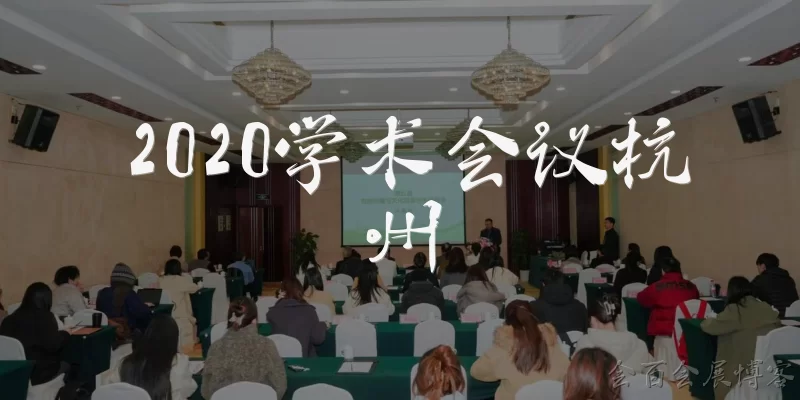
A: The 2020 Academic Conference in Hangzhou was a major interdisciplinary gathering held from November 20 to 22, 2020, at the Hangzhou International Expo Center. Organized by the Zhejiang Provincial Association for Science and Technology, it brought together over 3,000 researchers, scholars, and industry experts from more than 30 countries. The conference theme, 'Innovation and Resilience in a Post-Pandemic World,' focused on fields such as artificial intelligence, biomedical engineering, sustainable development, and digital economy. Due to COVID-19, the event adopted a hybrid format, combining on-site sessions in Hangzhou with virtual participation. Keynote speakers included Nobel laureates and leading Chinese academics. The conference featured 12 plenary talks, over 80 parallel sessions, and a technology exhibition. It served as a vital platform for knowledge exchange and international collaboration during a challenging global period.
Q: What were the main topics discussed at the 2020 Academic Conference in Hangzhou?
A: The 2020 Academic Conference in Hangzhou covered a wide range of cutting-edge topics. Major themes included artificial intelligence and big data analytics, with sessions on machine learning and smart cities. Biomedical research was prominent, focusing on vaccine development, telemedicine, and public health responses to COVID-19. Sustainable development discussions addressed green energy, climate change adaptation, and circular economy practices. The digital economy track explored e-commerce, fintech, and blockchain applications, reflecting Hangzhou's role as a tech hub. Additionally, there were dedicated forums on advanced materials, quantum computing, and agricultural innovation. Participants also debated ethical and policy issues surrounding AI and data privacy. The conference emphasized interdisciplinary approaches, encouraging collaboration between computer scientists, engineers, medical professionals, and social scientists. These topics aligned with global challenges and China's 14th Five-Year Plan priorities, making the event highly relevant and forward-looking.
Q: Who were the notable speakers at the 2020 Academic Conference in Hangzhou?
A: The 2020 Academic Conference in Hangzhou featured an impressive lineup of speakers. Keynote addresses were given by several Nobel laureates, including Dr. Tu Youyou, who discussed artemisinin and global health, and Dr. Andrew Fire, who spoke on RNA interference. Other prominent speakers included Dr. Wang Yifang, director of the Institute of High Energy Physics, who presented on particle physics; Dr. Li Lanjuan, a leading epidemiologist, who shared insights on pandemic control; and Dr. Zhang Yaqin, former president of Baidu, who talked about AI and industry transformation. International voices included Dr. Soumya Swaminathan, WHO chief scientist, via video link. Additionally, dozens of IEEE and ACM fellows, university presidents, and corporate R&D heads led parallel sessions. Their diverse expertise ensured rich discussions across all conference tracks. Many speakers also participated in panel debates and networking events, making the conference a truly global intellectual exchange.
Q: What was the impact of the 2020 Academic Conference in Hangzhou?
A: The 2020 Academic Conference in Hangzhou had significant impact on both academia and industry. First, it facilitated international collaboration despite travel restrictions, with over 1,500 virtual participants and 300 on-site attendees from 30 countries. Second, it produced a joint declaration on post-pandemic innovation, signed by 50 institutions, promoting open science and data sharing. Third, the conference led to the establishment of three new research consortia: one on AI for healthcare, one on green energy, and one on digital economy standards. Fourth, it enhanced Hangzhou's reputation as a global conference destination and innovation hub. Fifth, many papers presented were later published in high-impact journals, and several patents emerged from the discussions. Finally, the event attracted media coverage from outlets like Xinhua and Nature, amplifying its reach. Overall, it served as a catalyst for cross-border partnerships and advanced the global response to shared challenges.
Dialogue about
Common scenarios of "2020 Academic Conference Hangzhou"
【Conference Chair】 Welcome everyone to the 2020 Academic Conference in Hangzhou. We are gathered here to discuss the latest advancements in artificial intelligence and its applications. Let's begin with a brief overview of the conference agenda.
【Keynote Speaker】 Thank you. I'm excited to present on the topic of 'AI in Healthcare: Opportunities and Challenges'. The integration of AI in medical diagnostics has shown promising results, but we must also address ethical considerations.
【Researcher】 I agree. In my research, we've developed an AI model that can detect early signs of diabetic retinopathy with 95% accuracy. However, data privacy remains a major concern.
【Industry Expert】 From an industry perspective, deploying AI in hospitals requires robust infrastructure and regulatory compliance. We need to collaborate with policymakers to create standards.
【Graduate Student】 As a student, I'm curious about the computational resources required for training such models. Are there any open-source datasets or platforms that can help?
【Keynote Speaker】 Yes, there are several. For example, the MIMIC-III dataset is widely used for critical care research. Also, platforms like Kaggle host competitions with medical imaging data.
【Researcher】 But we must be careful about bias in these datasets. If the data is not representative, the AI models may not generalize well across different populations.
【Industry Expert】 That's true. We've seen cases where AI models performed poorly on underrepresented groups. It's crucial to have diverse datasets and to validate models across various demographics.
【Conference Chair】 Let's also discuss the role of explainable AI in healthcare. Patients and doctors need to understand how decisions are made. Any thoughts?
【Researcher】 Explainable AI is essential for trust. We're working on techniques like SHAP and LIME to provide insights into model predictions. But there's a trade-off between accuracy and interpretability.
【Graduate Student】 Could you elaborate on that trade-off? Is it always necessary to sacrifice accuracy for interpretability?
【Keynote Speaker】 Not always. Recent research shows that with careful design, we can achieve both. For instance, attention mechanisms in deep learning can highlight important features while maintaining high accuracy.
【Industry Expert】 In practice, we need to consider the regulatory environment. The FDA has been developing guidelines for AI-based medical devices, emphasizing transparency and safety.
【Conference Chair】 Moving on, let's touch upon the topic of AI in drug discovery. How is Hangzhou contributing to this field?
【Researcher】 Hangzhou has a thriving biotech sector. Several startups are using AI to predict drug-target interactions and repurpose existing drugs. The local government has also provided funding for such initiatives.
【Graduate Student】 I've heard about the 'Hangzhou AI Pharma Summit' last year. Are there plans for similar events this year, given the pandemic?
【Conference Chair】 Yes, we are planning a virtual summit in December. It will feature speakers from both academia and industry, and we hope to foster more collaborations.
【Industry Expert】 Virtual events have their advantages, like broader reach. But networking is more challenging. We should incorporate interactive sessions to facilitate connections.
【Keynote Speaker】 Absolutely. We can use breakout rooms and AI-powered matchmaking to help attendees connect based on their interests.
【Conference Chair】 Great ideas. Let's wrap up this session. Thank you all for your insights. We'll reconvene after the break for the poster presentations.